Old Friend Seoul
April 2024, Seoul, a crisp spring morning. The small art museum that I’d been wanting to visit in the trendy Hongdae neighbourhood… wasn’t there. The navigation map had directed me to a non-descript location, something that could be either a residence or office. It had no sign and seemed to be under construction. This does not bode well.
I’d taken this solo trip to get some creative inspiration and reunite with an old friend, the kind of friend you may not keep in touch with regularly but always think of with affection and deep gratitude. She’s a friend who had been crucially important in my journey when I was exploring a career change as a designer a decade ago. Her name is Seoul.
I first visited Seoul in 2010 for a university friend’s wedding. It was a time before South Korea dominated popular culture in pretty much every aspect. I was a fresh business graduate who studied finance at my father’s advice because I had no idea what I wanted to do with my life, while doing freelance graphic design on the side, without any sort of misguided belief that I could turn my passion into a full-time career. Seoul was the friend who told me Look! The possibilities. I marvelled at anti-ageing hand cream in peach-shaped containers, colourful rice cakes, shoes made out of clothing scraps, a transparent cigarette disposal can in the shape of human lungs, stores that made me feel like I was stepping into new worlds, tenderly restored old houses and new creations of glass and concrete. Four years later, I returned to Seoul for an art school fair to receive portfolio critique and test the waters of the possibility of design school. It was through Seoul’s gentle leading—in the form of a school admissions advisor—that directed me to my school of choice and a series of decisions that brought me to today.
Fast forward another ten years—I now have a design career I would never have dreamed possible back then. A visit to Seoul was long overdue.
When we don’t see someone for ten years, we are somehow surprised they have changed when we meet again. For some reason, while we’re evolving and growing, we expect others to be frozen in time. Similarly, I came to Seoul expecting the safety and comfort of an old friend, forgetting that time has marched forward. Suddenly, she felt difficult to get to know. In addition to the missing museum, I stood out in the sea of black in the trains in my green jacket and rainbow scarf. One of my favourite places to visit in Hongdae—Sangsang Madang Design Complex, that I had easily found on previous visits—now required circling around and careful navigation. Starbucks and Baskin Robbins popped up at almost every turn. Teenage girls spoke too loudly next to me at the casual eatery I had lunch at, rattling me. I started to question—was it Seoul that had changed, or me?
The first time I came to Seoul, I was not aware of her traumatic history in the first half of the 20th century, particularly during her Japanese occupation. Korean names and language were banned, uncountable cultural artefacts looted, hundreds of historic buildings demolished, masses of people killed or put to forced labour. This was followed by rapid modernisation, almost as though she never had time to heal her wounds properly. That first time I visited, I was young and selfish, solely focused on what she could do for me. Since then, I’ve learned about her history in pieces and traces. A Korean-American friend pointed out to me how tiny the Korean section in the Metropolitan Museum of Art in New York was compared to the other cultures. I see Korea’s history in the creativity of her meals, using little to create much.
When someone has gone through pain, it’s important to listen. I decide to pay attention. During one of my lunches, I sit and look out of the window for an extended time. There is so much she is saying to me. There’s the household products store that declares, on its signboard, that it’s been in business since 1978. The perennial English language school. There’s the F45 banner, for the popular fitness chain—demand for quick fixes for fitness transcends borders. There’s the dodgy-looking budget hotel, right next to a hipster coffee and dessert shop. A row of brutalist high-rise buildings stands across the road from the hipster healthy salad joint that grows its own vegetables indoors in the glow of LED lights. Construction across the street is a continuous hum in the background. There’s the young Korean customers around me, including the dude with the mullet. Hello, the 80s called, they want their hair back.
I can see, very much, in this hodgepodge, palimpsest of a window, that all this while, Seoul, you have been doing what it takes to survive. You’re a fighter. It’s a different kind of beauty from my long-ago visits. How could you prioritise beauty, when you just needed ways to feed hungry mouths? You’ve done what it takes to get where you are today.
I keep looking. I people-watch at Mangwon market, with its abundant stacks and varieties of kimchi perfuming the air with its pungent goodness. I sit at a wine bar in Yeonnam run by a young couple—a space that looks like a cosy living room—for hours. The owners’ two scruffy dogs roam free in the dining space. The male owner-chef kneels down to let one of them lick his face, closing his eyes to savour the moment. I wander through many cherry-blossomed streets in full bloom, that Seoul generously put in my path without my planning. I visit more museums that teach me and challenge my perspectives. I savour numerous coffee shops that open late, their windows lighting up the dark in cosy welcome. I take lots of photos, and see layers upon layers when I sift through them. I feel like Seoul could take a lifetime to truly know.
Perhaps that’s what love is—letting go of expectations of what a person or a place should or shouldn’t be. To allow their evolving, accepting their constant flux. They are sometimes mundane, sometimes erratic, something loud and annoying, but always a symphony.
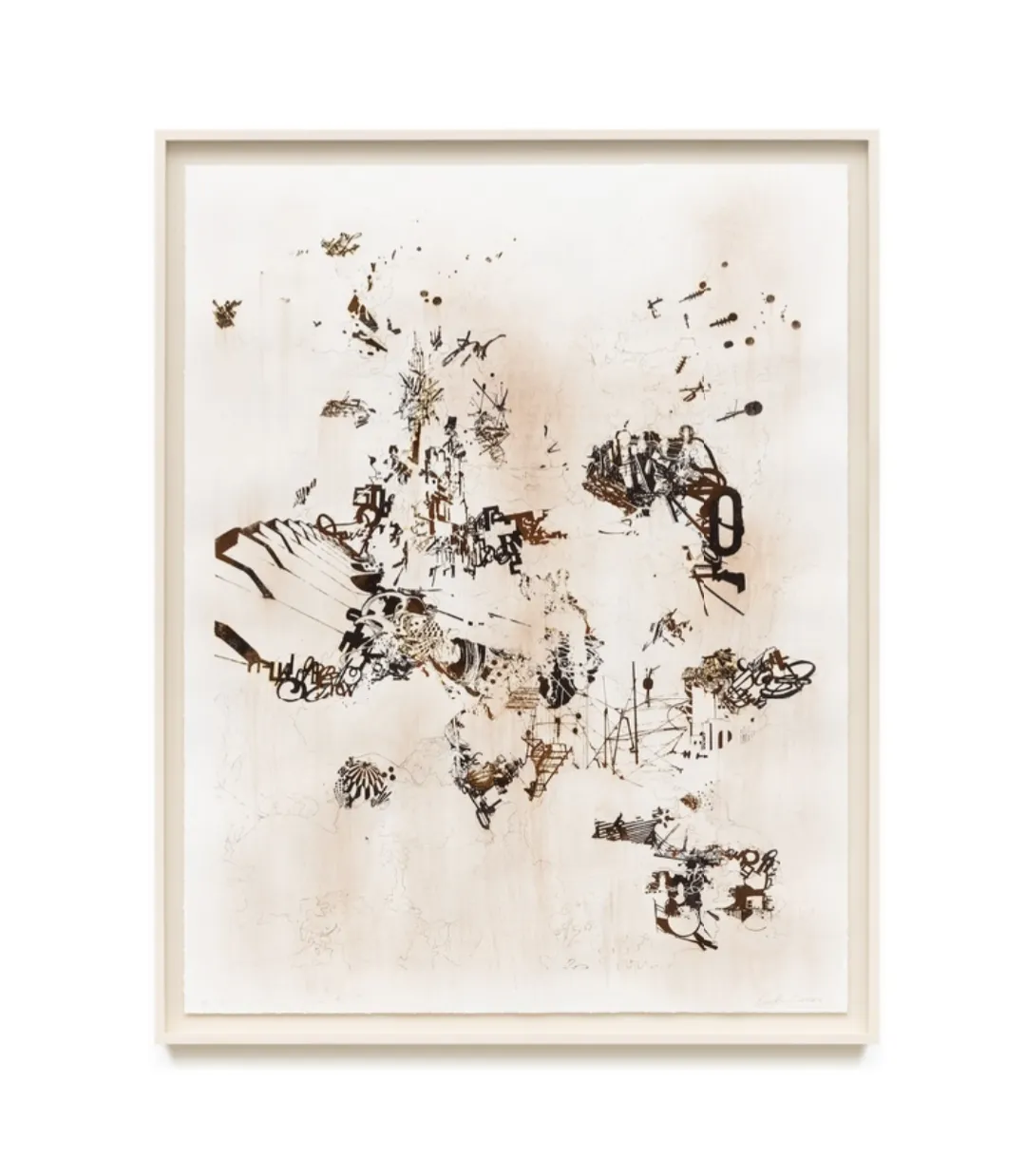
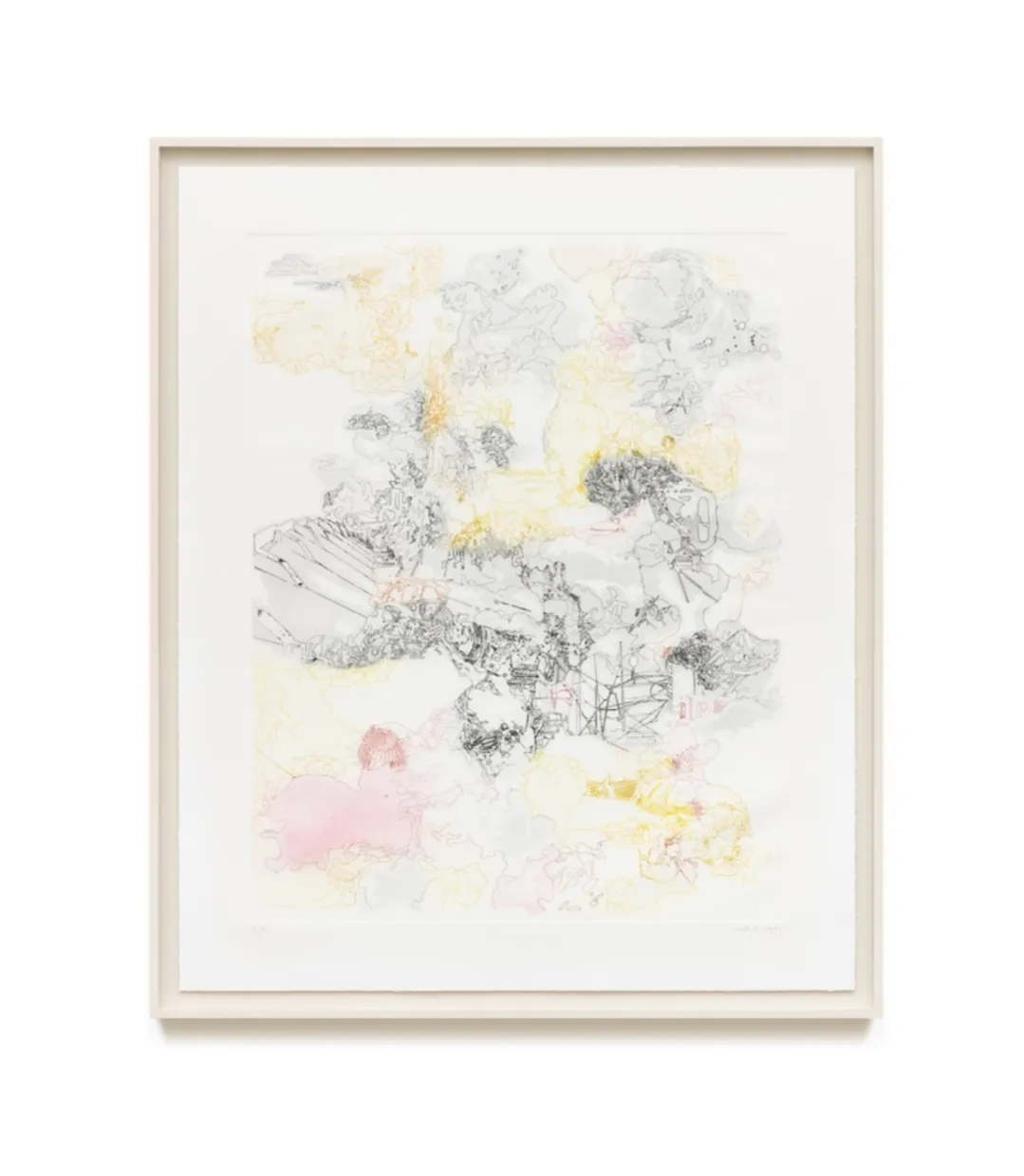
Just five months earlier, in Singapore, I’d seen an exhibition of a South Korean artist, Lee Bul, at the Singapore Tyler Print Institute. Born in the ‘60s and raised by politically active parents, she was the witness to a dramatically changing country. I remember being most enraptured by a series of prints that were based on a drawing that Lee Bul developed from a collage of explosions and mushroom clouds. Built from the same master plate, each print encapsulates the same loose edges and shapes, but each tells a new story. On one side of the gallery wall, a row of prints were harsh with oxidised iron filings and rusty, burnt effects, a crumbling landscape. On the opposite side, its print cousins have the ghost of similar edges, but now with translucent layers of soft pastel colours and shapes, new patterns blooming from initially empty spaces.
We can return to places of pain and trauma, with it no longer holding power over us, and write new stories. I hope we keep unfolding.